


For a long time we thought Westcott’s first village show was held in 1901. It wasn’t. In September 1857, forty-three years before the vicar’s meeting at the Reading Room, a group of Westcott gentlemen founded the Westcott District Floral and Horticultural Society, “for the encouragement of cottage gardening“. Within a month the village had its first show. For about five years the society thrived, with two shows a year, prizes of spades, wheelbarrows and even a Bible, and a secretary the newspapers could only call “indefatigable“. Then it vanished from the record, and the village forgot it had ever existed.
This is the story of Westcott’s first gardening society, pieced together from the local papers of the 1850s. The Westcott Horticultural Society of 1901 and today’s Westcott Gardeners Club both, without knowing it, picked up where it left off.
Before the society: prizes at Bury Hill
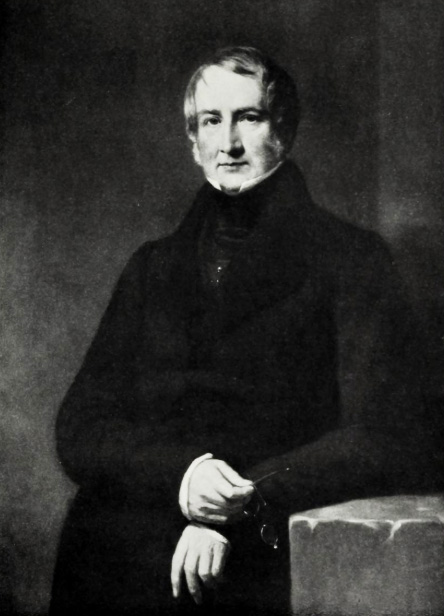
Long before Westcott had a society, it had the Barclays. Charles Barclay of Bury Hill gave prizes to the cottagers on his estate for the best-kept gardens, and when he died in 1855 his son, Arthur Kett Barclay, carried on “his esteemed father’s custom“. On Old Michaelmas Day, 11 October 1856, the thirty-three cottage tenants of the Bury Hill estate were summoned to the mansion. Mr Barclay exhorted them “to industry, honesty, and general good conduct” and then handed out the year’s garden prizes. William Dodd won the first prize of £1, William Mercer came second, and eight more men each received half a crown. Then everyone moved to the coach-house for roast beef, plum pudding, pipes and tobacco, and plenty of Barclay’s own ale and porter. The chair was taken by the estate steward, Thomas Page, and the vice-chair by the head gardener, Mr Roby.
The Barclays were farmers as well as gardeners. In October 1855, weeks before his death, Charles Barclay won £5 at the Dorking Agricultural Association for the best acre of mangel wurzel. The idea of giving working men prizes for growing things well was everywhere in the 1850s, and the Barclays knew exactly how a cottagers’ show worked. In October 1855, weeks before his death, Charles Barclay presided over the last show of the season of the Dorking cottagers’ society, as he “had on many occasions”. He congratulated the cottagers on growing potatoes that would see them through the high prices of the Crimean War. Two years later his son brought the same idea home to Westcott.
“The encouragement of cottage gardening”, 1857
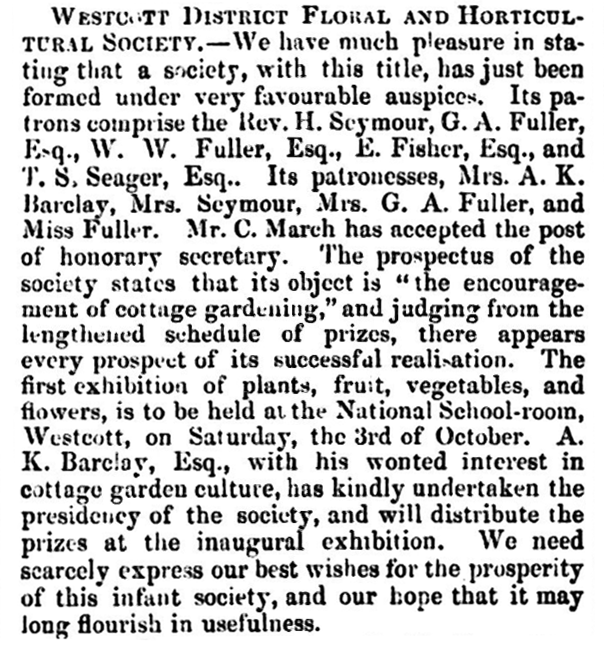
In September 1857 the local paper announced that a new society “has just been formed under very favourable auspices“. A. K. Barclay agreed to be its President. Its patrons were the Rev. H. Seymour, G. A. Fuller, W. W. Fuller, E. Fisher and T. S. Seager, and its patronesses were Mrs Barclay, Mrs Seymour, Mrs Fuller and Miss Fuller. The honorary secretary was Mr Charles March, of Brooklands on the Guildford Road.
The society’s purpose was stated in one line: “the encouragement of cottage gardening“. The prize schedule was already long, and the first exhibition was set for Saturday 3 October 1857 at the school room.
The first show, 3 October 1857
The show “far exceeded the anticipations of the visitors generally“. For a society only a month old, the reporter thought it “really most creditable to the competitors“. The judges found some classes so close that they had to give extra prizes. As you would expect in a cottage show, there were far more vegetables than flowers, “but nevertheless one fine nosegay of dahlias was exhibited which would not have disgraced a more important show“. Mr and Mrs Barclay came, along with the Seagers, Miss Fuller, the Rev. Seymour and the Rev. H. Lambert, the local Independent minister.
The Victorian press liked its shows to improve people as well as please them. The report opened with a paragraph on the “manly vigour” of competition. A later one praised these societies as “great moral agents” that would “imbue” cottagers “with habits of industry and sobriety“. Underneath the sermon, though, it was a village show much like ours: people trying to grow the best onion in Westcott!
Two shows a year
The society grew quickly. By 1858 it was holding two shows a year, one in July and one in the autumn, and the autumn schedule had a long list of classes:
- apples and pears, and black and white grapes
- 36 round or 36 kidney potatoes
- carrots, parsnips, turnips, onions, savoys and red cabbages
- 50 pods of scarlet runners
- a salad of six varieties and a collection of herbs
- window plants, nosegays, wild flowers and dahlias
- the neatest and best cultivated garden.
Its accounts for 1858 show an income of £35 6s 6d, an outlay of £23 5s 8d and £12 in hand. For 1859 it offered 153 prizes at two shows: 64 in July and 89 in September.
The July 1858 show was held in a drought, “peculiarly trying … to so sandy a soil as that of the neighbourhood of Westcott“. Every Westcott gardener since will recognise that complaint! The September 1859 show, by contrast, was “very fine indeed“. The weather could be cruel the other way too. In September 1860, at the end of one of the wettest summers on record, it rained all day and not a single outdoor grape had ripened (read the full report and prize list for 1860).
The judges were the head gardeners of neighbouring estates: Mr Kemp of Albury Park, Mr Underwood of Broom Hall and Mr Dove of Juniper Hall. Forty years later, the 1901 society was still asking the big houses’ head gardeners to judge its shows.
Cottagers, labouring gardeners and amateurs
The society kept its classes carefully apart. Most prizes were for cottagers, the people it was founded to help. A separate best-garden prize went to “mechanics and gentlemen’s labouring gardeners“, the men who worked in the big gardens and might otherwise have swept the board. A few amateurs, local men of slightly better means, had classes of their own. At the 1860 show the three amateurs, Mr Fell and Joseph and Jesse Rose, even handed back their winnings so that they could be turned into tools for the cottagers.
The 1901 society used the same kind of split, with separate classes for cottagers and amateurs.
Spades, forks and a Bible
 Most prizes were in cash, from a shilling to three shillings, with £1 for the best-kept garden. That was roughly a fortnight’s wages for a farm labourer at the time. The extra prizes are the ones that bring the period to life:
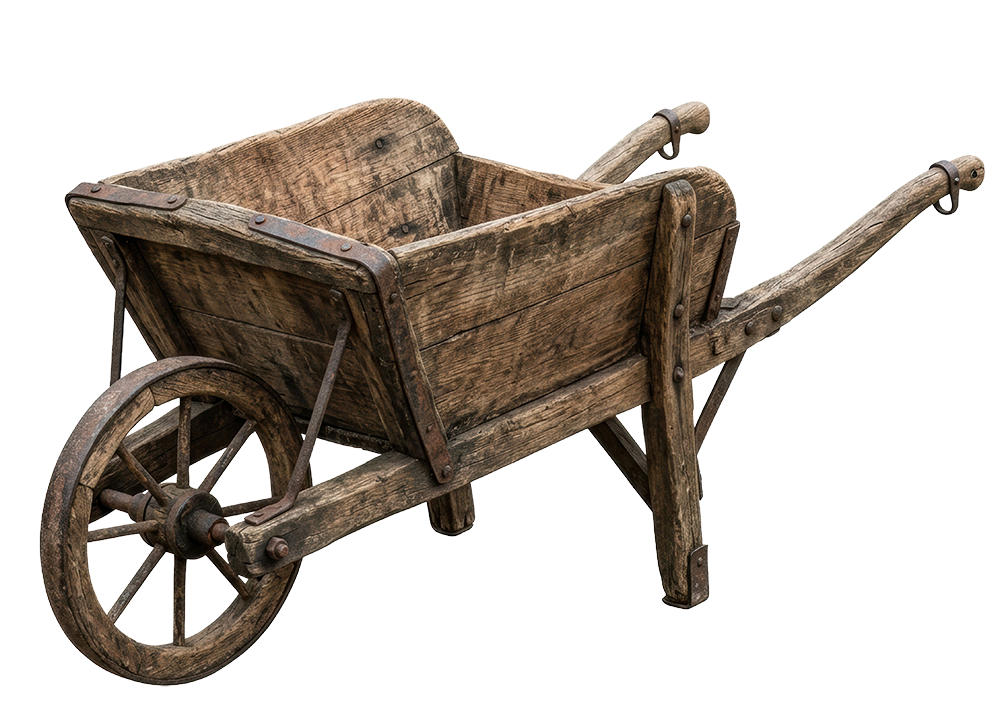
- a wheelbarrow from Mrs Barclay, for the best collection of fruit, vegetables and flowers
- a steel digging fork and garden reel from the Rev. Seymour
- a garden line from Mr Roby, the Bury Hill head gardener
- a hand saw, hand bill and hoe from Mr Burrell and Mr Fuller
- an axe, hoe and garden rake from Mr Seager
- a steel digging fork from Mr Charles March, the secretary himself
- a quarto Bible, from the Rev. Lambert, for the best collection of potatoes. It was won by William Dodd.
The men who won
The star of the 1850s was William Dodd. He won the Bury Hill cottage-garden prize in 1856, then the twelve-variety vegetable collection, the potato Bible, the dahlias and, in 1859, the £1 best-garden prize for labouring gardeners. He was the R. Martingale of his day. Close behind him were Mark Briggs, Nathaniel Rowland, Jesse Garman, James Weller, James Dibble and Peter Greenfield.
One family stands out, because we already know how its story ends. H. Razzell was one of the Bury Hill cottagers given a garden prize in 1856. James Razzell won prizes in 1859, including first for wild flowers, and again at the rain-soaked show of 1860. By 1862 his son had joined him, and the paper had to tell them apart as J. Razzell senior and J. Razzell junior. Junior beat his father in the onions, and Mr Seager’s axe, hoe and rake went to him. Fifty years later a W. Razzell stands in the back row of the Bury Hill garden staff photographs, Kate Razzell is winning children’s prizes at the shows, and Lance Corporal W. J. Razzell, a gardener like his father, is killed in Mesopotamia in 1916 (read his story). J. Razzell junior was W. J.’s grandfather, and James Razzell senior his great-grandfather. That makes four generations of Razzell gardeners showing in Westcott across sixty years.
The Razzells aren’t alone. Wilkins, Beadle, Rose, Bignold, Skilton (spelled Skelton in 1856), Potter and Walton all win prizes in the 1850s and the names turn up again on the prize lists of 1901–1914. A Bignold appears among the cottagers given garden prizes at Bury Hill in 1856, and “Mr Bignold” stands among the Bury Hill garden staff photographed around 1905. In Westcott, it seems, families kept gardening, even when the societies didn’t last.
Charles March of Brooklands
Every report of the first society comes back to its secretary. Charles March was “the indefatigable secretary, Mr Charles March, to whose exertions the success of this society is mainly attributable“. When the President stayed away from the rain-soaked show of 1860, it was March who got it staged and handed out the prizes himself.
The Marches were an old Westcott family. Brooklands, on the Guildford Road, was owned in the 1700s by Charles March and Jane Simmonds. It passed to their son William March and then to his son Charles, our secretary, who died in 1874. The 1840 tithe map records Charles March “of Brooklands” farming 5 acres of land nearby. Brooklands went on to play its own part in the village’s show history: it lent exhibits to the 1901 show, and in 1907 it hosted both the main show and the Dahlia Show.
A 170 year family connection to today’s Gardeners’ Club
There is one more connection, which we only discovered while writing this. The founding secretary’s grandfather, (who was also named Charles March) is a shared ancestor of Westcott Gardeners’ Club’s current Chairman, Matt Peskett. Our 19th century society secretary’s grandfather… was Matt’s six-times-great-grandfather. 166 years after Charles March stood up in the schoolroom to hand out forks and spades, a member of the same family did the same at the end of both Westcott Gardeners’ Club shows in 2026. There’s something pleasingly familiar about that (if a little spooky).
What happened next
The last newspaper report of the society is of an autumn show on 11 October 1862. After that it disappears from the papers. No record says why, but the clues point in one direction.
The society had been built around its President. A. K. Barclay of Bury Hill had founded it, chaired it, opened his purse for it and addressed the cottagers at its shows. But he had never been strong. At his father’s funeral in December 1855 the local paper described him as in “shattered physical condition, from a recent attack of paralysis”. He rallied enough to launch the society two years later, but by 1860 he was missing shows, and that September it was Charles March who had to stage the show and hand out the prizes. The paralysis never left him. In his last years he had a sled made so that his footmen could tow him up the steep slope to his observatory each night to carry on his astronomy. The observatory still appears on the Ordnance Survey map of the late 1860s, in the woods above the house. But a man who had to be towed up a hill was not going to be presiding over many village shows.
Money was tight too. In 1860 the society paid out “a little short of the sum usually given”, and the same year Dorking’s own cottagers’ society told its supporters that its funds were “very low”. A. K. Barclay died in 1869, and with him went any chance of the society being revived. Charles March, the secretary who had held it together, died five years later, in 1874.
The society faded, but its gardeners didn’t. Through the late 1860s William Mercer, John Comfort, William Dodd, Charles Wilkins, James Dibble and the Roses were still winning prizes, at the Dorking Cottagers’ Show down the road. Several of them were tenants on the Bury Hill estate, and Bury Hill’s head gardener, Mr Whitehead, was among the judges.
The Barclays kept up their own traditions, and the village never stopped loving its flowers. In July 1884 about 300 village schoolchildren were marched up to Bury Hill for their annual treat, where Mr Barclay’s men rowed every child round the lake before tea, races and a bun each. The same week, the children of Westcott walked in procession to Holy Trinity Church, each carrying flowers, for a children’s flower service. The flowers were heaped on the altar steps and then sent to St Thomas’s Hospital in London, to brighten the wards. But the society itself was gone, and the village forgot it.
The pattern repeated itself. The 19th century society had faded after its Barclay President fell ill and died. Its successor, founded in 1900, lost its President, Robert Barclay, in 1913, held its last show in July 1914, and saw Bury Hill put up for sale the same month, just before war broke out.
Forty years after that, in 1954, a few villagers staged a little exhibition in St John’s Church Hall, and the Westcott Gardeners’ Club followed in 1955. This time the club was founded at an open meeting and run by its own members, not by a big house. It has now lasted seventy years, longer than both earlier societies put together.
So when we say Westcott has been holding shows “since 1857”, we don’t mean one unbroken society. We mean something more stubborn: the same village, and often the same families, coming back to the same idea, almost 170 years after the first show was held in the Westcott schoolroom.
Can you help? The last report we have is from October 1862. If you know of later reports of the Westcott Floral and Horticultural Society, a copy of its rules or prize schedule, or anything more about Charles March or the Razzell family, we would love to hear from you.
Sources: local newspaper reports of 27 October 1855 (Dorking Agricultural Association), 18 October 1856 (Bury Hill estate cottagers’ entertainment), 19 September and 10 October 1857, 24 July 1858, 19 March and 1 October 1859, 29 September 1860 and 18 October 1862 (Westcott District Floral and Horticultural Society), and 12 July 1884 (school treat at Bury Hill); Westcott History Group, History of Heath Rise (1840 tithe map); March family history (Matt Peskett).