



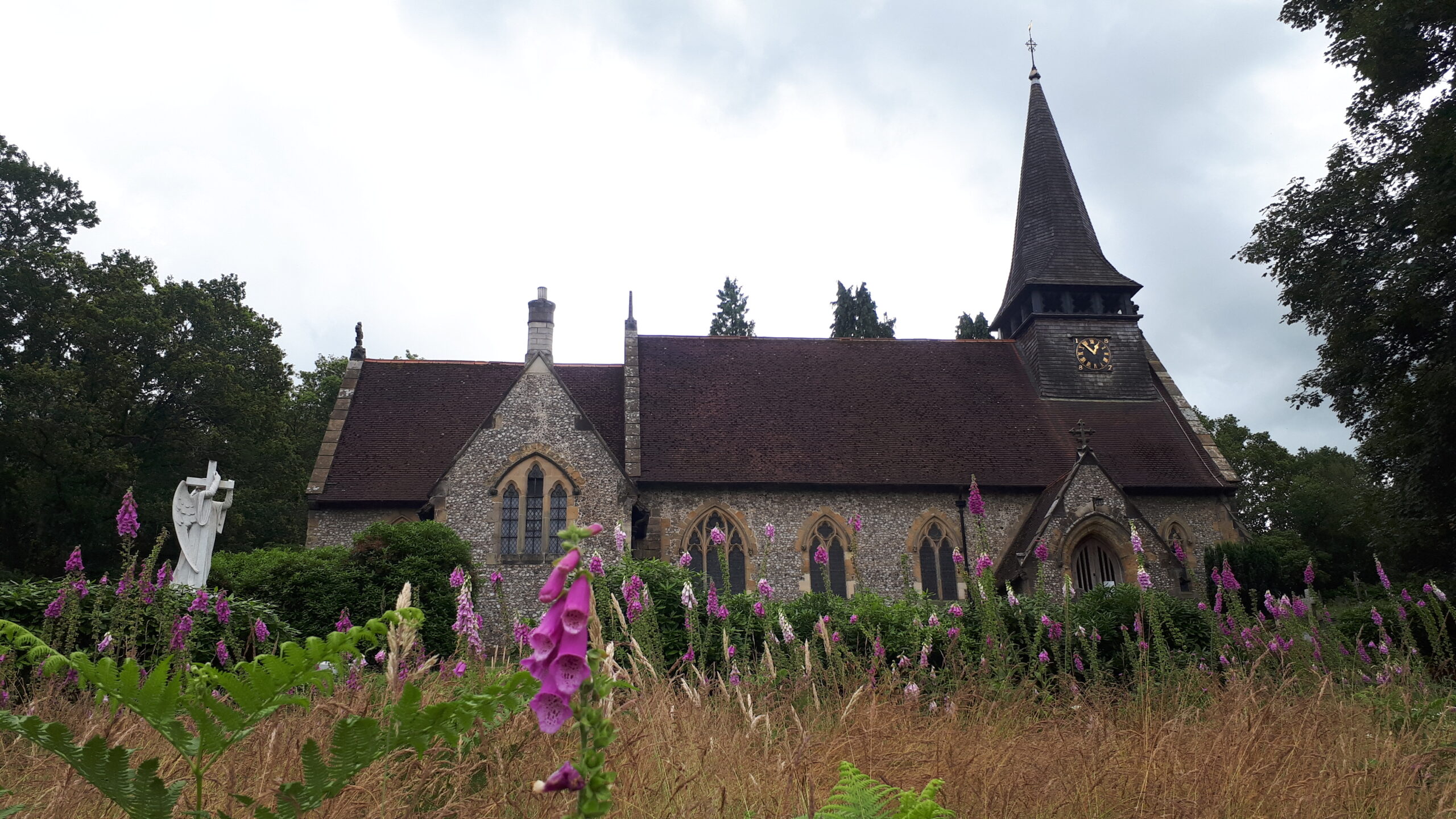
On 7 November 1920, Lieutenant General Sir Edmund Elles unveiled a memorial board in Holy Trinity Church, Westcott. It carries 36 names. Read straight down the list and they are just that, names, ranks and regiments. Look into who those men were, and a pattern appears that matters a great deal to anyone interested in the history of gardening in this village.
Before 1914 Westcott had a thriving annual horticultural show, held in the grounds of the big local houses and judged by well-known local gardeners (the full story is on our Westcott Horticultural Society page). After the war it simply stopped, and nobody revived it properly until the 1950s. The man who wrote the society’s first history in about 1962 recorded that gap but never explained it. The church memorial goes a long way towards doing so.
Much of what appears below comes from the research of the Westcott Local History Group, published on the Dorking Museum website. We are very grateful to them, and anyone wanting the full story of any of these men should start there.
Five men who worked in local gardens
Of the 36 men on the memorial, five earned their living in a local garden:
1. William Pullenger Woods – 22nd Battalion, London Regiment (The Queen’s)
William was a gardener on the Bury Hill Estate, following his father, also named William, into the same gardens. William was the family’s only son, and the family lived on Milton Street, in what is now Wyvern Cottage. His father was the “W. Woods” who did so well at the village show of 1907: first for cucumbers, turnips and red and black currants, fifth in the best cottage garden competition, and winner of the society’s silver championship cup. William junior was winning prizes too – at the 1905 show, when he was 12, “Wm. Woods” shared first prize for school gardens with a ‘George Tarrant’ (see below). Only 12 years later, William fought at Loos and on the Somme but died of wounds received in action near Ypres. He was 24, and is buried at Lijssenthoek Military Cemetery in Belgium.
A photograph of gardeners at Bury Hill taken around 1910 has a “Woods” in the back row and another “Woods” in the front row with the boys. It seems very likely these are William senior and William junior, father and son:
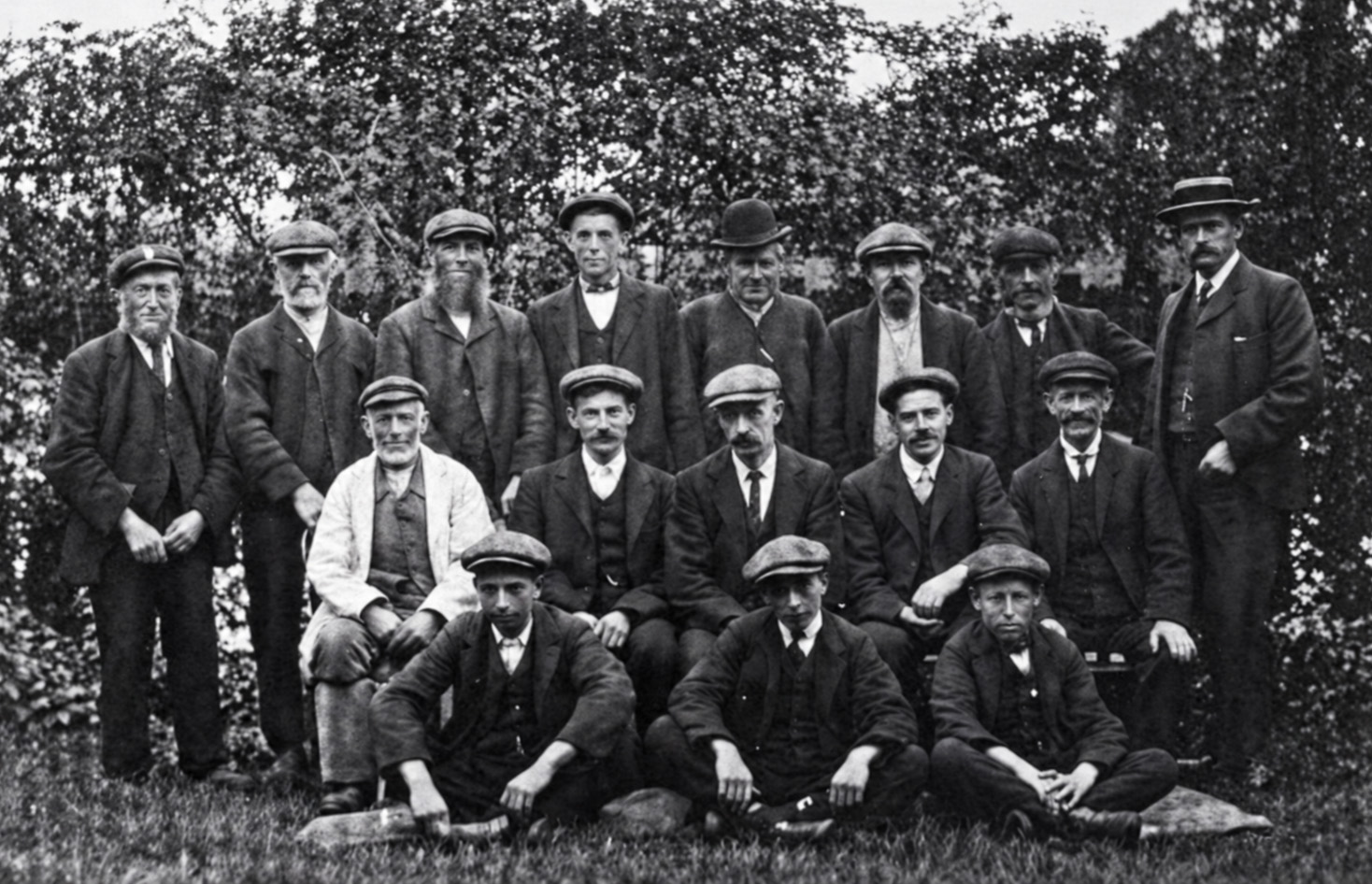
Left to right.
Back row: W. Razzell, A. Rose, Hopkins, Horley, Best, Taylor, Bill Woods (senior), W. Graysmark.
Middle row: Billy Huggett, Duddridge, Wakefield, George Lemon, Bignold.
Front row: Woods (junior), Smith, Page.
“W.Graysmark”, standing at the end of the back row in a suit, is the head gardener we meet throughout the society’s show reports. Many of the other names will be familiar from the society’s prize lists: Bignold, Best, Hopkins, Rose, Wakefield, Woods and Mills or Miles were among the most successful exhibitors in the cottagers’ classes, and their wives Mrs Duddridge and Mrs Horley in the cookery. It seems many of the society’s star cottagers were working gardeners at Bury Hill, growing their own vegetables at home and showing them in the cottagers’ classes. It may help explain why, in 1914, the society closed one section to anyone “employed as gardeners or garden labourers“.
2. William James Razzell – 1st/5th Battalion, The Queen’s (Royal West Surrey Regiment)
Another son who followed his father into gardening, William Razzell lived at 3 Victoria Cottages on what is now Bailey Road. Like his father, he had been employed in the gardens at Bury Hill. His father (also W. Razzell) is pictured below. The family had been growing and showing in Westcott for generations. William’s great-grandfather, James Razzell, was winning prizes at the village’s first flower show society in 1859 and 1860, and by 1862 William’s grandfather was competing alongside him as “J. Razzell, junior”, beating his own father in the onions (see James’s prizes in 1860). Kate Razzell, one of William’s four younger sisters, won prizes for wild flowers in the children’s classes in 1905 and 1907. William J Razzell served with the Dorking company of the 1st/5th Queen’s, the local Territorials, who sailed for India in October 1914 and were sent on to Mesopotamia (Iraq) at the end of 1915. In the heat of the Mesopotamian summer, with cholera and fever as dangerous as the enemy, he was killed near Basra on 11 September 1916, the same day as Charles Upfold from Brooker’s timber yard in Dorking. He was 31, and lies in Basra War Cemetery.
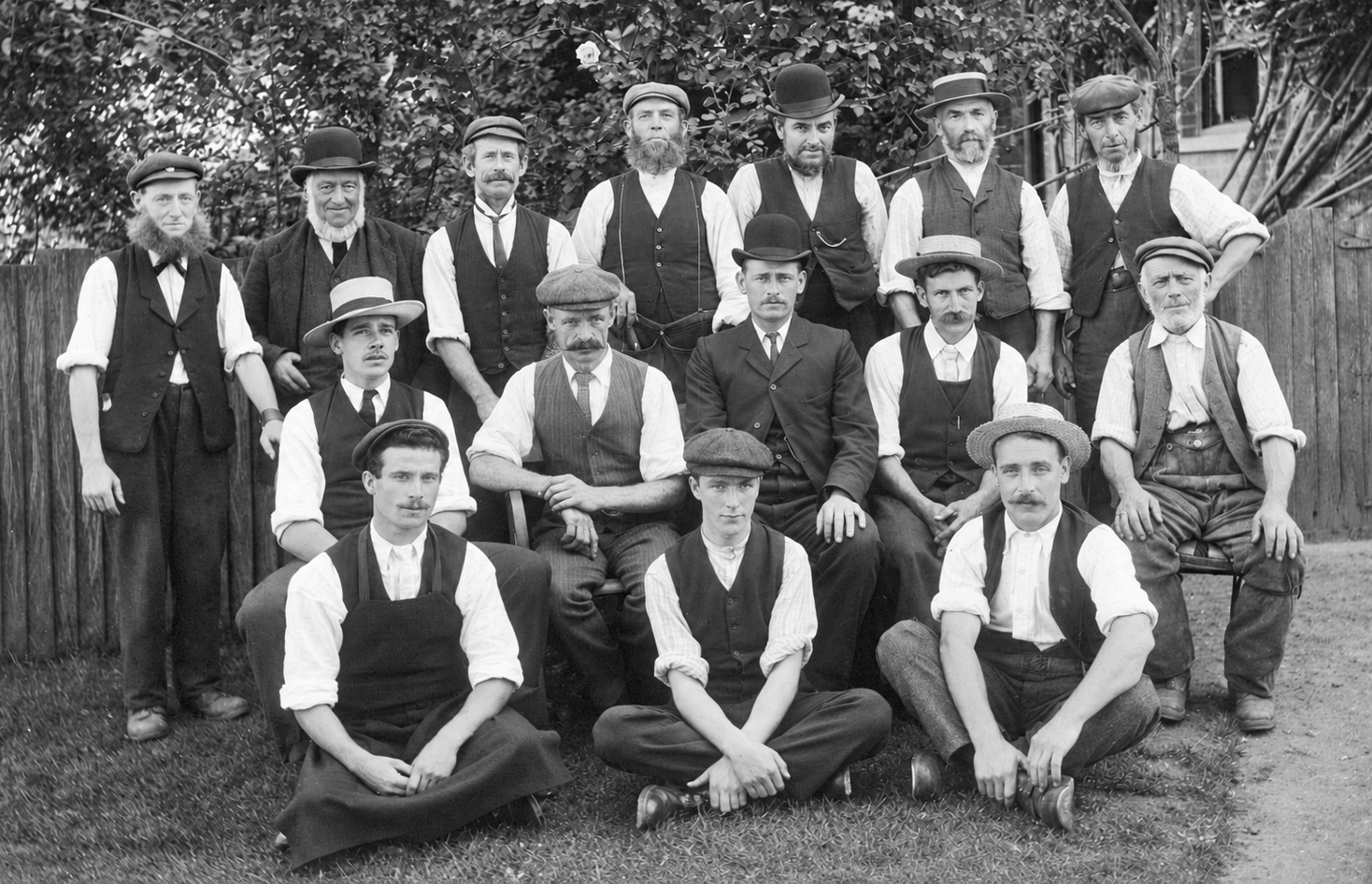
Left to right.
Back row: W. Razzell, Brett, Bignold, Hopkins, Best, A. Rose, Bill Woods.
Middle row: George Lemon, Wakefield, W. Graysmark, Duddridge, Billy Huggett.
Front row: Unidentified, “Nobbler” Mills, Unidentified.
3. Frank Woodman – Queen’s (Royal West Surrey Regiment)
Frank’s father Charles had been a regular soldier in the Royal Dragoon Guards before becoming a domestic gardener, and Frank went the same way. After leaving school he worked as a gardener on the Ashcombe estate at Ranmore and rang the bells at St Barnabas, the estate church. A notebook he wrote at the age of 12 survives, and it shows a boy already properly interested in growing things. Sergeant Woodman was killed in France on 31 July 1918, with the end of the war barely three and a half months away. He was 24, and is buried at Oulchy-le-Château.
4. Frank Harold Page – Queen’s (Royal West Surrey Regiment)
Frank became a domestic gardener as soon as he left school, and he may have started young. At the 1907 show, when he would have been about 13 years of age, he shared first prize in the boys’ gardens class. His employer isn’t recorded, but a “Page” sits in the front row of the first photograph of the Bury Hill garden staff taken around 1910 (above), among the youngest of the men. Frank would have been about 16. He was also killed in action in Mesopotamia on 16 May 1916, aged just 22.
5. William George Fritter – King’s Royal Rifle Corps
The 1911 census lists William as a “garden boy”, the bottom rung of the ladder in a big Edwardian garden, where many a head gardener had started. His father was a farm labourer, and soon after William enlisted the family moved to Milton Court Farm. He was killed near Ypres on 30 July 1915, aged 21. His body was never found, and his name is on the Menin Gate.
Bury Hill’s Losses
If one place in Westcott carries the weight of this story, it is Bury Hill. It hosted the village’s first twentieth century summer flower show on 24 July 1901 and, with an extensive botanical collection, presented its own exhibits to be displayed. The early society’s list of supporters includes “R. Barclay Esq.” and a “Mrs L Barclay”. The Barclays had been the family at Bury Hill since 1803, and the First World War took two of their sons.
Captain George Eric Barclay – King’s Own (Royal Lancaster Regiment)
Born at Bury Hill in 1889, George went from Harrow to Sandhurst and into the army in 1909. From 1912 he served with the Nigeria Regiment, first in the Cameroons and then in German East Africa. On 24 January 1917, having just taken command of his company, he was shot while bringing up reinforcements near the Rufiji River. He was 27. He was mentioned in despatches, is buried at Morogoro in present-day Tanzania, and a memorial service was held for him at Westcott.
Major Thomas Hubert Barclay – Surrey (Queen Mary’s) Yeomanry
Tom, five years older than George and the second son of the house, was at Harrow and Trinity College, Cambridge, and joined the Surrey Yeomanry in 1903. He served with his squadron in France, Belgium and Salonika and rose to Major on the divisional staff. After home leave in April 1917 he was returning to Salonika aboard the troopship Transylvania when she was torpedoed in the Mediterranean on 4 May. The family history tells what happened next. Tom reached a raft, but, realising it was overloaded with the men he had rescued, he slipped into the water and swam behind it, and with a Captain A.R. Hill tried to steer it through a rough sea. He was a powerful swimmer and could have saved himself, but he stayed with them. Rescue came after three and a half hours. Captain Hill was picked up unconscious and survived. Tom died of exhaustion on 5 May 1917, aged 33. He was buried with full military honours at Savona, and the King awarded him, posthumously, the Board of Trade Silver Medal for Gallantry in Saving Life at Sea.
The Bury Hill Estate
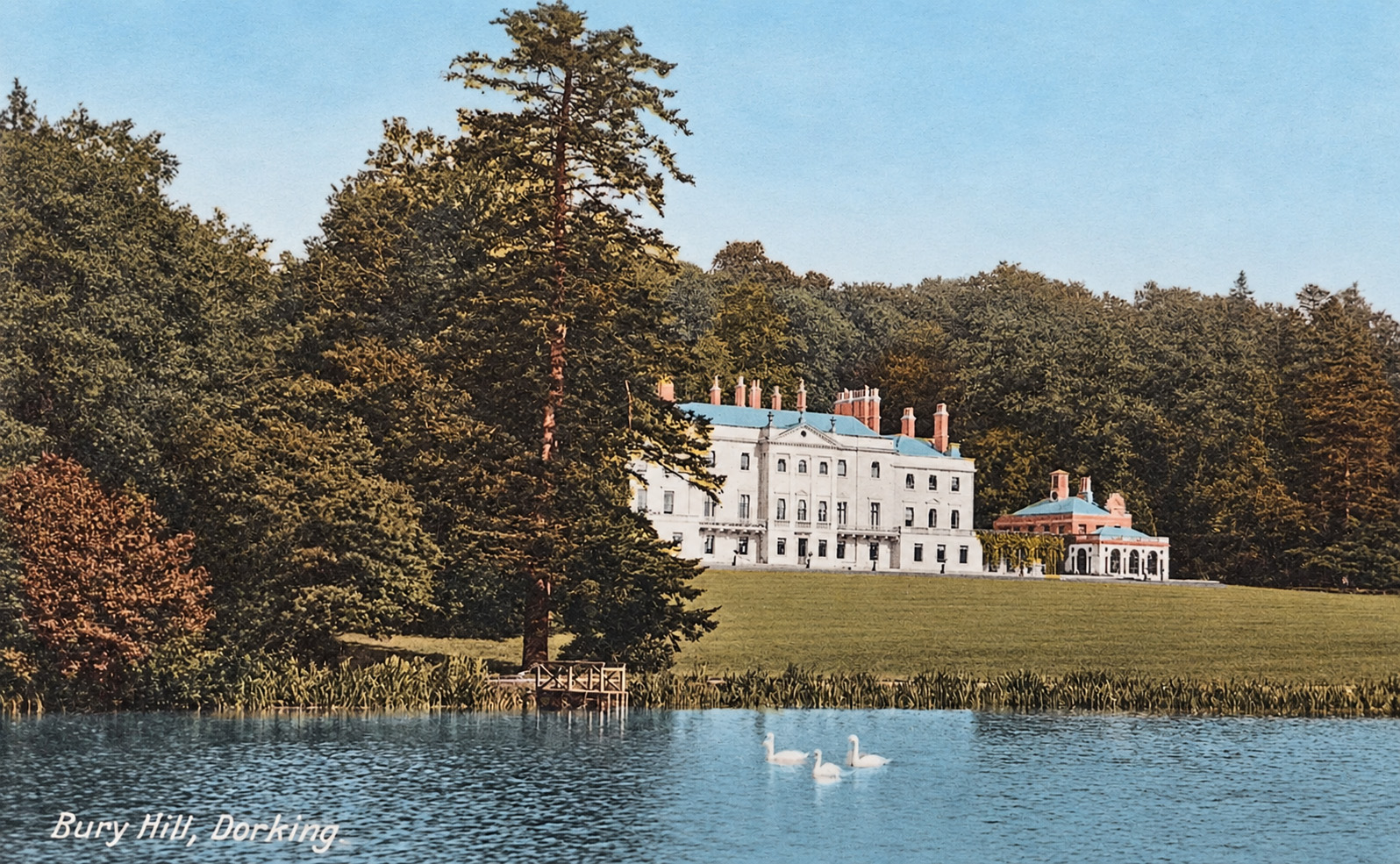
Their father, Robert Barclay, was the society’s President from its first show in 1901, and it was Mrs Barclay who handed out the prizes that day when he was too ill to attend. He died in 1913. The following year his eldest son, Lt Col Robert Wyvill Barclay, put Bury Hill up for sale, and the auction was held on 23 July 1914, in the same month as the society’s last show. No acceptable bids were made, so the Barclays let Bury Hill to a tenant, Sir Spencer Maryon-Wilson, and moved to a new house they had built in Logmore Lane. They did not move back until 1927. By the time of Tom’s death, his mother Laura was living at Albury Heath.
Bury Hill’s losses went beyond the family. William Woods and William Razzell, and both their fathers, worked in its gardens. James and Harry Still, both house painters, had grown up at Keepers Cottage on Milton Street as sons of the Bury Hill gamekeeper. Harry died of wounds received while serving as a stretcher bearer at Langemarck in August 1917. James survived the fighting only to die in a military hospital in November 1918, a fortnight after the Armistice, probably of the influenza that swept the country that winter. And James Spooner, a wood feller working for a Lieutenant Colonel R.W. Barclay (very probably another of the brothers), was killed on the first day of the German spring offensive in March 1918.
From the Show Bench
Not every man on the memorial worked in a garden, but some of them grew up around the society’s horticultural shows. Three families stand out:
The Jeaters. In 1901, at the society’s very first show, “Mrs Henry Jeater” sent fuchsias that the judges singled out for praise, and in 1903 she won first prize for them. At the same 1901 show, a boy named Jeater shared second prize for best school garden. Henry William Jeater was about 12 that summer. He grew up to be a painter in the family firm on Guildford Road (one of its employees was Harry Still, the gamekeeper’s son, who is also on the memorial). Private Henry Jeater of the Queen’s was killed at the Battle of the Menin Road on 25 September 1917, aged 28, and has no known grave. His name is on the Tyne Cot Memorial. Jeater is not a common name, and the boy at the 1901 show was very probably Henry himself, with his mother’s fuchsias on the next table.
The Rhoades. Frederick Rhoades, a retired grocer, was one of the society’s keenest exhibitors, winning prizes for vegetables, fruit and honey and sitting on its committee. Mrs Rhoades gave a prize for the best home-made loaf in 1905 – a grocer judging the bread seems like just the sort of qualified individual needed. In 1907 their daughter Amy married at Holy Trinity and sailed for a new life in New Zealand. Their son Harry Rhoades, a carpenter, served with the New Zealand Engineers. How he came to join them isn’t recorded, but it seems likely he had followed his sister out there. He died of trench fever at a military hospital in Hampshire in June 1918, aged 30.
George Tarrant. At the 1905 show, George Tarrant shared first prize for school gardens with William Pullenger Woods (see above). Sadly both are listed on the Holy Trinity memorial. Tarrant was killed at Loos on 28 April 1917, five days before William. Tarrant was posthumously awarded the Military Medal, a decoration which is awarded ‘in recognition of an act or acts of exemplary gallantry during active operations against the enemy.’ Tarrant was the son of Thomas and Sarah Tarrant who lived at Taw’s Farm, Balchin’s Lane, Westcott. Before the war he worked in the village post office on the corner of Parsonage Lane.
Not Just Westcott
What happened here happened in gardens all over Britain. At Heligan in Cornwall, twelve gardeners went to war and three returned. Kew lost nineteen of its staff.
Our current Chairman, Matt Peskett, has his own family link to this. His great-grandfather George Cook was a gardener at Tilgate near Crawley from the age of 17, and was conscripted in 1916. He fought on the Somme and at Passchendaele, was wounded twice, and came home. Two of his brothers, William and Charles, did not, and neither has a known grave.
George’s story ends in Westcott. He spent his last years in a Gardeners’ Royal Benevolent Society care home in Henfield then finally at Rokefield, one of the big houses that had hosted the village show before the war, and died there in 1997, aged 108 (and England’s oldest man). Matt, who was born in Hertfordshire and came to Westcott decades later when he married a Westcott woman, only discovered the connection in recent years.
What it meant for the Horticultural Show
The last Horticultural Society Show was held at Rookery Farm in July 1914, a few weeks before war was declared. The club’s potted 1962 history says only that the war stopped the shows and that no further record exists until 1954, apart from small exhibitions at the village fete. It never says why the society didn’t simply start again in 1919. We do know the society was still active during the war. In January 1916 it was reported to be taking on the work of a local war food society, organising food growing rather than showing – classes were being run to keep the plots going in the absence of the men.
Here is our reading. Westcott’s shows were built on two things: the big houses opening their gardens and sending exhibits, and the skill of the gardeners who worked in them. Robert Barclay, the society’s President from the start, died in 1913. By 1918 Bury Hill, the house that began it all, had been let to a tenant, the family had lost two sons, and the estate had lost several of the men who worked in its gardens. Five of the village’s 36 dead were gardeners by trade. We can’t prove that this is why the shows didn’t come back, but it would be remarkable if it had made no difference.
The Dovecote
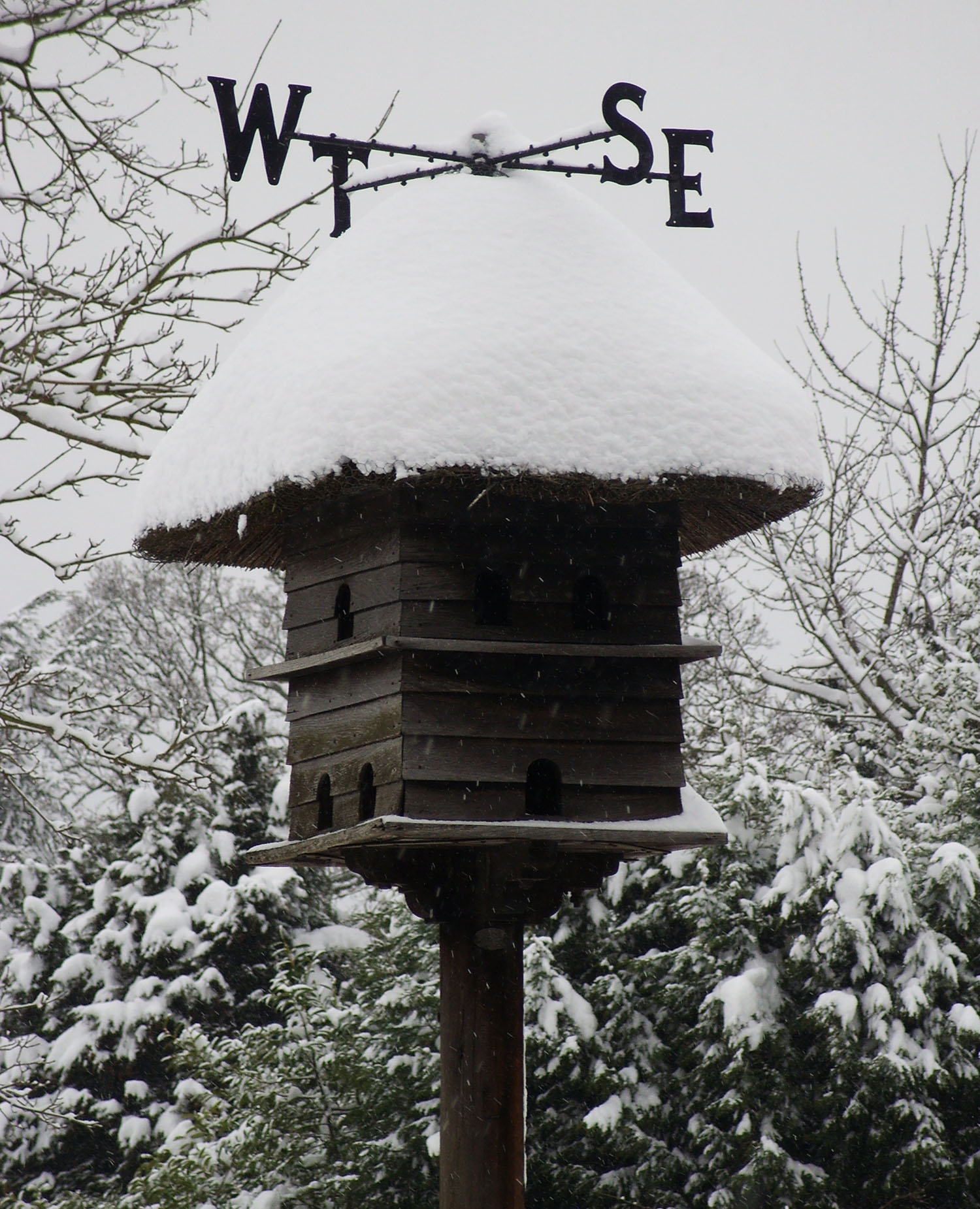
The war has left its mark on the Gardeners’ Club in a quieter way too. The club’s logo shows the dovecote on Westcott Green. It isn’t just a pretty village landmark: it is a memorial. In 1922 John Burnet Geake gave the dovecote and the thatched bus shelter beside it to the village in memory of his son, Lieutenant Boyd Burnet Geake of the York and Lancaster Regiment, who was killed on 1 July 1916, the first day of the Battle of the Somme. A replacement plaque was unveiled by Boyd’s grandchildren in 2011. So every show schedule the club prints today carries, in its corner, one of Westcott’s war memorials.
Can you add to this?
If any of these men were in your family, or you have photographs, letters, show schedules or prize cards from before 1914, we would very much like to hear from you. We would also welcome anything about men who worked in Westcott’s gardens, served, and came home. Their story is part of this history too.
*Research credit: Westcott Local History Group (including the Bury Hill garden staff photographs), via the Dorking Museum and Heritage Centre’s “Resting in Peace” Westcott memorial pages, which include individual biographies of every man named.*